The Admonition to Treat Others Courteously and Reciprocate
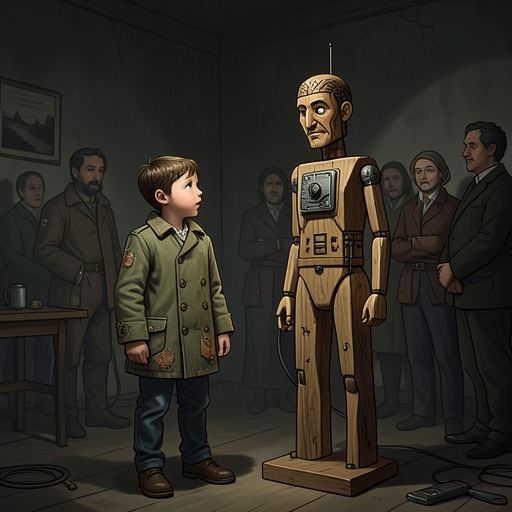
Pinocchio (Tania Zamorsky Edition)The Admonition to Treat Others Courteously and Reciprocate is the Talking Cricket’s explicit rule for conduct: show courtesy to others when possible, so that courtesy may be returned in difficult times. In the closing exchange with Pinocchio and Geppetto, the lesson turns an old grievance into a present act of mercy, joining reciprocity not to revenge but to practical kindness.
The Lesson in the Closing Scene
After Pinocchio and Geppetto turn toward the ceiling, they see the Talking Cricket on a beam. Pinocchio greets him courteously. The Cricket answers by recalling the occasion when Pinocchio tried to drive him from the house by throwing a wooden hammer at him. The contrast gives the advice its personal weight: Pinocchio now speaks politely to someone he once treated with violence.
Pinocchio does not deny the offense. He agrees that the Cricket is right and even invites him to throw a hammer at him in return, asking only that he spare his poor father. The Cricket refuses to answer insult with retaliation. He says he will have pity on both father and son, but explains that he recalled the earlier treatment to teach Pinocchio that people should be courteous whenever they can, if they hope to receive equal courtesy in their own days of need. Pinocchio accepts the correction and says he will remember it.
The scene makes the rule reciprocal without making kindness a simple bargain. The Cricket helps Pinocchio and Geppetto despite the harm he suffered; at the same time, he insists that remembered conduct matters. His mercy does not erase the earlier act, but turns it into an occasion for Pinocchio to recognize how he should treat others.
Earlier Warnings and Resistance to Correction
The rule’s closing formulation looks back to the story’s earlier portrayal of Pinocchio’s resistance to advice. The narrator introduces the Talking Cricket episode as a tale about how badly disobedient children take being corrected by those who know more than they do. Later, the Cricket warns Pinocchio about the dangers of traveling at night, including assassins. Pinocchio dismisses the warning, reasoning that assassins are merely inventions used by parents to frighten children; the narrator’s chapter heading links his refusal to heed good advice with his encounter with assassins.
That earlier pattern clarifies what changes in the final exchange. Pinocchio once treated correction as an unwelcome intrusion and tried to silence the one offering it. Now he listens, admits fault, and promises to retain the lesson. The Cricket’s point is broader than obedience to a particular warning: the manner in which Pinocchio treats another person is itself consequential.
A Lesson Set Against Temptation and Suspense
The book repeatedly places moral instruction beside reversals in Pinocchio’s adventures. When the Blue-Haired Fairy tells him he will become a well-behaved boy the next day, his joy is accompanied by preparations for a celebration: his school friends are to be invited, with two hundred cups of coffee with milk and four hundred buttered rolls. The narrator then undercuts that promised occasion with a turn in the story: instead of becoming a boy, Pinocchio secretly leaves with Lucignolo for Toyland. The episode makes a hoped-for reward vulnerable to Pinocchio’s choices, even as the Cricket’s final counsel focuses more narrowly on courtesy.
The narrative also moves between moral framing and cliffhanger. After Pinocchio says goodbye to the Tuna, he gropes through the darkness inside the Great Shark, and the narrator teases the reader with the question of whom he will find there. These interruptions keep the adventure moving while the chapter headings and the Cricket’s closing words guide readers toward its lessons. The final admonition gathers the pattern into a concrete interpersonal rule: good treatment is worth extending before a crisis, not only requested once one has arrived.
The Hut and the Turn from Rebuke to Help
After Pinocchio accepts the lesson, he asks how the Talking Cricket came to have his hut. The Cricket explains that a gracious goat with beautiful blue wool gave it to him the previous day. The detail shifts the exchange from remembered offense toward present circumstances: the Cricket has offered pity to Pinocchio and Geppetto, and the conversation turns to a shelter bestowed by another. The text does not state that the goat’s gift is a repayment for any particular deed, but its placement beside the admonition keeps acts of giving and receiving in view.
The rule therefore closes a long-running conflict between Pinocchio and the voice that tried to correct him. Courtesy is not presented as a guarantee that kindness will always be repaid in a predictable way. Rather, the Cricket’s response demonstrates the conduct he recommends: he remembers the wrong, speaks plainly about it, and still helps when help is needed.